



How Is Your Favorite Lollipop Made? A Comprehensive Guide To Lollipop Making Machines
Lollipops are undoubtedly a favorite of people throughout the ages. However, few people know how these sweet, soft candies are made. This article will explain the lollipop production process, including analyzing and preparing the raw materials and turning the candy into chocolate. The various technical steps and methods used in production will be explained to help you understand the complexities of lollipop production.
What are the raw materials used to make lollipops?
Sugar and corn syrup—Lollipops are primarily made of sugar, while corn syrup provides the flavor. The sweetener in lollipops, primarily in the form of sucrose, gives the candy its unique flavor. Corn syrup contains glucose, which prevents the sugar from crystallizing and drying, forming a sandy consistency, ensuring a uniform product with a smoother texture. These ingredients are heated to liquefy to the desired consistency, forming the lollipops, which then harden upon cooling. Other ingredients in the syrup often further enhance the stability of the finished product and improve its appearance and taste.
Citric and malic acids—Citric and malic acids are crucial in lollipop production, as they impart the candy with its unique flavor and character. Citric acid, commonly found in citrus fruits, adds a tart flavor that counteracts the overly sweet taste of sugar and corn syrup. It also lowers pH, inhibits microbial growth, and acts as a preservative. Malic acid, also found in fruits like apples, enhances fruit flavor and provides a smooth, long-lasting tartness. In short, these acids enhance the taste, extend shelf life, and improve the overall quality of the lollipop.
Other Essential Ingredients in Lollipop Production—While sugar, corn syrup, citric acid, and malic acid are the primary ingredients in lollipop production, other supplementary ingredients, such as flavorings, colorings, and stabilizers, are also used. Most flavorings are natural, but some are synthetic. For example, fruit, mint, and other exotic flavors are added to enhance the taste. Food coloring is also commonly used to brighten the color of lollipops. Emulsifiers, such as lecithin or hydrocolloids, are also added to ensure the proper consistency and prevent separation during processing. All of these ingredients work together to create a product that is visually pleasing, smooth in texture, and maintains its structural integrity.
How are lollipops made?
Lollipop manufacturing involves several steps to ensure quality control:
1. Mixing the ingredients – Sugar, water, corn syrup (glucose), and flavorings such as citric acid powder are combined and then heated until a clear syrup forms (called homogeneity). The temperature must sometimes be precisely adjusted at this stage to ensure the correct consistency without caramelizing. Otherwise, all the ingredients can cook too quickly, resulting in an undesirable outcome. This ultimately creates a poor-quality batch and can easily ruin all subsequent batches, as they may not provide any clues as to what went wrong by the time it's too late, or even earlier, because nothing has been done.
2. Boiling – The syrup is boiled to a temperature that determines the firmness of the lollipop after cooling. This process requires large boilers capable of processing large quantities of syrup at once. Cooling and Coloring – After reaching the target heating level, the heated mixture is allowed to cool gradually while adding different colors as specified in the recipe manual. To ensure rapid cooling and avoid the formation of hot spots (where some parts cool faster than others, resulting in uneven quality distribution throughout the product, and thus another batch of substandard products), heat exchangers and cooling tunnels are used to ensure uniform temperature throughout the batch, until each piece reaches the desired hardness, from the top surface all the way down to the bottom (including the bottom), with no stickiness except near the edges. This often occurs without prior instruction.
3. Forming and Shaping – The syrup is poured into lollipop-shaped molds using a forming machine. The forming machine has a built-in rod insertion device that allows the rod to be inserted at the correct time as the candy begins to form, ensuring a secure connection between the two objects. The two objects are temporarily connected until they are permanently separated after achieving the desired initial goals. These goals may be intentional or unintentional, depending on the circumstances in a specific environment, a specific global context, and before, during, or even after the end of a specific time period, including all subsequent moments. Sometimes, these steps can be repeated multiple times depending on demand, but it's crucial to maintain appropriate intervals between iterations to avoid a single failure that could lead to catastrophic, irreversible consequences.
4. Cooling and Hardening - After the lollipops are formed, they are further cooled under controlled conditions to fully harden. This is crucial to maintaining structural integrity and preventing deformation.
5. Packaging - Finally, each lollipop is individually wrapped in protective material to prevent contamination and maintain freshness throughout storage. Achieving this goal quickly is crucial to maintaining quality standards while avoiding high labor costs. While machines can automate similar tasks, manual labor is also required, reducing the time and human contact required for all operations during the packaging phase. Given the current global health crisis, packaging is the stage that requires the most human intervention.
Types of Lollipops Candy
Solid Lollipops
Hard lollipops are the most common and recognizable type of candy. This is due to their firm texture and long-lasting taste. These lollipops have a base made from a sugar syrup. The syrup is heated to high temperatures, up to 300 degrees Fahrenheit (149 degrees Celsius). It is then poured into molds until it hardens. During the cooling process, food-grade dyes or flavorings can be added to create different colors and flavors.
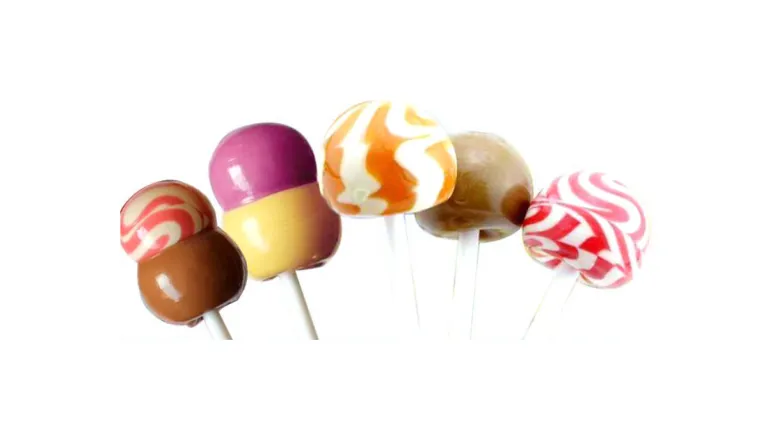
Filled Lollipops
The core of a filled lollipop is typically a liquid or semi-solid, such as juice, chocolate, or gum. First, manufacturers create a hollow candy cavity within a hard candy shell. After this step, but before the candy has fully solidified, they fill it with the desired filling, resulting in a filled lollipop. Successfully achieving this requires precise temperature and timing control to ensure the center is not exposed during the molding process.
Flat Lollipops
Flat lollipops are typically wider than regular round lollipops, making them appear larger even though they may be thinner than the round candies mentioned above. Examples include flat lollipops found at carnivals or themed candy shops. The process for making flat lollipops is very similar to that for hard lollipops, with one difference: instead of pouring hot syrup into spherical molds, the syrup is poured into flat molds, each with a different pattern printed on both sides. The mixture is then poured into the molds, creating the actual dessert.

How does a lollipop making machine work?
An overview of the machine's operating principle is provided below: Generally speaking, the process begins by melting the ingredients, which include sugary elements such as sucrose. Other ingredients include water and glucose. This is heated in a mixing tank at a set temperature of approximately 110°C to form a homogeneous syrup. Depending on the specific lollipop making equipment and production line setup, the ingredients are melted in a melting tank, a blender, or a cooker.
The melted ingredients are then transferred to a holding tank where they remain for a period of time before the next stage of processing. The syrup is heated to temperatures of up to 145°C in a micro-film cooker. Essentially, this enhances the flavor of the lollipop while reducing the syrup's moisture content.
After the lollipops have cooled, they are placed in cooling tanks for further cooling before being fed into the molding unit. Molds come in various shapes, sizes, and designs and can be customized to your liking. Next, a stick-inserting machine inserts the lollipops into the molds. For small-scale production, you can manually insert the lollipops into the appropriate molds. The molded lollipops, with their sticks, are removed from the machine through a delivery chute and sent to a packaging machine.
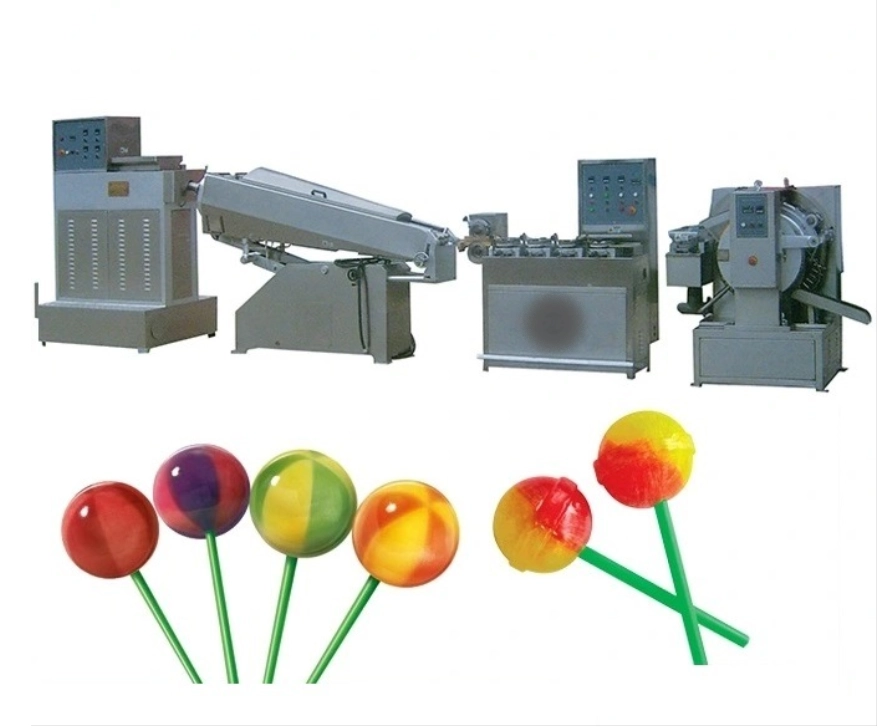
What are the main components of a lollipop making machine?
Control Panel—This is the unit that displays, monitors, and adjusts various automatic parameters.
The unit is equipped with an LED touchscreen that displays information and other details about the machine.
Conveyor Unit—This unit features a specific number of moving belts, tracks, and pipes that transport materials to different stations within the machine.
Hopper—This is a cylindrical or funnel-shaped container located at the top of the machine that holds and feeds raw materials.
Electrical Unit—This unit contains the various electrical components integrated into the machine to deliver specific electrical functions.
The essence of this unit is to ensure the seamless conversion of electrical energy into the usable capacity required for machine operation.
Mixing tank – A relatively large container used to heat and mix the various lollipop ingredients to form a uniform, desired base.
Cooling tunnel – This is a fairly long tunnel with a built-in cooling system designed to dissipate excess heat generated by processing lollipop products.
Sensor – A device, module, or subsystem that detects changes or events within the equipment while it is operating.
Forming unit – This consists of different lollipop molds in various designs and shapes, used to form the products into the desired shape.
Pressure unit – This component regulates the air system within the lollipop making machine.
Shipping chute – This is the component where the finished lollipop products leave the equipment for packaging and packaging.
What is the standard production capacity of lollipop making machine?
A typical lollipop making machine has a production capacity of approximately 250 kg/hour. However, higher-end equipment with higher production capacities is also available. Essentially, the production capacity of different models varies based on a number of variables. Power rating is one factor that determines a lollipop machine's specific production capacity. Machines with higher power ratings may have greater production capacity, and vice versa.
Size is another factor that influences a lollipop machine's specific output. Most larger machines are designed for industrial production and therefore may have higher outputs.
How can you add different colors and flavors to a lollipop machine?
Typically, lollipop ingredients are heated and mixed in a mixing tank or cooker, depending on the machine model.
The syrup is further heated to approximately 145°C in a micro-film cooker. At this stage, the syrup's relatively low moisture content allows for the addition of desired flavors and colors.
This allows the flavors to be fully incorporated into the syrup before it is dried and formed into lollipops. Adding flavors at this stage also makes it easier to achieve a uniform flavor and color.
Conclusion
Lollipop machines simplify and automate the entire lollipop-making process. These machines not only ensure consistent product quality but also reduce manual intervention, thereby increasing production speed. Equipped with high-speed components and precise control systems, these machines efficiently process large volumes of raw materials to form, bake, and package lollipops. These machines are programmed with advanced technology to minimize downtime, maximizing production output and enabling manufacturers to utilize the equipment to produce lollipops and achieve economies of scale to meet growing demand. Furthermore, because all operations are automated, there is less room for error, resulting in a more reliable and efficient production line.
FAQ
Q: What is the process for a manufacturing company to produce lollipops?
A: The lollipop production process, which falls under the candy industry, involves more than two stages. The process typically begins with the raw materials being transported to the factory, typically using railcars called open cars. The sugar syrup is poured into a pre-cooker; then, after steam injection, it is heated in a specialized system to dehydrate and maintain the syrup's temperature before being transported to the final cooker. The sticky candy slurry is then formed into lollipops using production molding machines.
Q: Who came up with the idea for the lollipop?
A: While the lollipop is a long-standing delicacy, Ethel V. Gabriel claims credit for inventing the modern lollipop. In 1908, Gabriel patented a machine for inserting lollipop sticks into candies, earning her the credit. These sweet treats later became known as lollipops, named after the popular racehorse "Lolly Pop." However, the concept of the lollipop is ancient, with many variations across cultures, and lollipops are popular around the world.
Q: How do manufacturers create lollipops with different flavors and colors?
A: Typically, coloring and flavoring are added to the sugar mixture during the cooking process. Liquid flavorings and food coloring are added to the hot syrup before it's formed into lollipop shapes. If the lollipop has multiple colors or flavors, different batches of candy can be placed or interleaved during the molding process, which is standard lollipop making procedure.
Q: Is there anything cool or unique about the lollipop making method?
A: Yes, there are some really cool and unique lollipop creations, and you can even make your own. Some candy makers layer different colored candies together to create a beautiful effect. Others print edible designs on the tops of their lollipops. Some are 3D-printed, while others are handmade with unique shapes and flavors. Some even create giant lollipops or lollipops dipped in bugs, while others are made entirely of printed designs.

QUICK LINKS
CONTACT US
Yinrich Confectionery Equipment Manufacturer